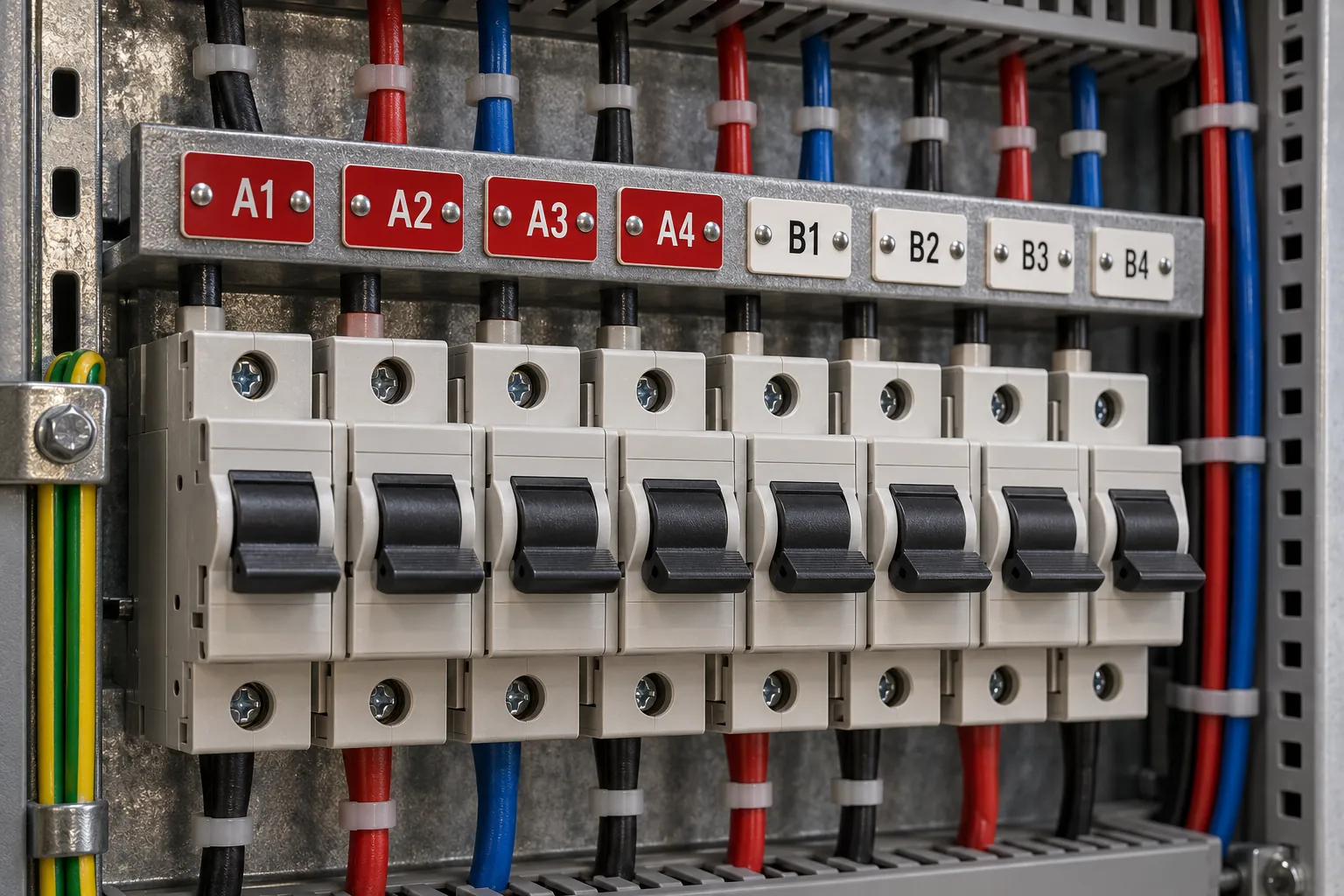
Making Lamacoids In-House: A Guide for Electrical Contractors in Canada
Lamacoids are the engraved two-colour plastic labels on panels, disconnects, switchgear and control cabinets. Most contractors order them from an engraving shop and wait. A growing number make them in their own shop on a desktop laser, the same day they’re needed. This guide covers the materials, the code basics, the workflow and a simple way to work out whether it pays for your shop.
What a lamacoid is
“Lamacoid” is the name most Canadian trades use for a laminated, engraved plastic label. It’s a thin sheet with a cap layer in one colour over a core in a contrasting colour. Engraving removes the cap and exposes the core, so the text is part of the material. Nothing can wear or rub off the way a printed label can.
Materials
The usual material is a two-ply engraving plastic such as Rowmark LaserMAX. Things to choose:
- Colour combination. The project spec usually sets the colours, for example a different colour scheme for emergency or fire-alarm equipment. Check the spec before you cut a batch, and keep the common combinations in stock.
- Thickness. 1/16″ is the common lamacoid thickness. Thinner, flexible products suit small labels and curved surfaces.
- Indoor or outdoor. For outdoor or harsh locations, use a two-ply rated for exterior use, such as Rowmark LaserGloss Exterior.
- Mounting. Screws, rivets or adhesive, as the spec requires. Plan your hole sizes and positions in the artwork so the laser cuts them with the label.
We stock Rowmark in Delta, BC and ship across Canada.
Code and spec basics, stated carefully
The Canadian Electrical Code, Part I (CSA C22.1), with your province’s amendments, requires electrical equipment, disconnects and circuits to be identified, and the markings to be legible and durable. The code sets what has to be identified. It doesn’t say the label must be a lamacoid.
The project specification, the engineer, the owner or the inspector usually decides the format: engraved lamacoids, the colours, the letter height and the mounting method. Always work from:
- the current CEC and your provincial amendments,
- the project specification,
- your inspector’s or owner’s requirements.
When those disagree, ask before you engrave. Remaking a panel’s labels costs more than the phone call.
Workflow
A typical in-house process:
- Build templates. Set up standard label sizes in your design software, with text frames, hole positions and a cut line. Reuse them on every job.
- Import the label schedule. Most label lists live in a spreadsheet. Lay out labels from the list rather than retyping, which cuts down on errors.
- Nest on the sheet. Fill the sheet to reduce waste, grouped by colour combination.
- Engrave, then cut. The laser engraves the text through the cap layer, then cuts the outlines and holes in the same job.
- Check and bag by location. Check each label against the schedule, then bag by panel or room so they go to the right place on site.
A desktop CO₂ laser such as the Epilog Fusion Ascent 12, with a 24″ × 12″ bed, handles lamacoid work comfortably. A larger bed lets you run full sheets and bigger batches. You’ll also need fume extraction. A unit such as FiltraBox sits beside the laser and needs no outside vent, which suits a shop or office.
Does it pay? A simple break-even formula
Work it out with your own numbers. You need:
- N = labels you make or buy per year
- P_out = what you pay per label from an outside supplier, including shipping
- P_mat = material cost per label in-house (sheet cost divided by labels per sheet)
- T = minutes of staff time per label in-house (layout, engraving, checking, bagging)
- R = your labour cost per minute
- E = your total equipment cost: laser, fume extraction and setup
Then:
Savings per label = P_out − P_mat − (T × R)
Annual savings = N × savings per label
Payback in years = E ÷ annual savings
Calculate your label costs using your own numbers.
Two things the formula leaves out, which you should weigh too:
- Running costs: filters, lenses, electricity and maintenance. Subtract a yearly figure from the annual savings.
- Time saved on site: a crew waiting a few days for a relabel, or a return trip for a missing label, costs real money. If that happens on your jobs, it often matters more than the label price.
Run the numbers at a few volumes, for example 500, 2,000 and 5,000 labels a year, to see where the laser starts to pay for your shop. Use your own supplier prices and labour rate, not industry averages.
The laser isn’t limited to lamacoids, either. The same machine engraves equipment nameplates, valve tags, cable tags and signage, and those jobs add to the savings.
Getting started
Send us your label schedule or a sample of what you buy today. We’ll show you how it would run on a laser, help you size the machine and fume extraction, and quote the Rowmark stock you’ll need. Training is included with every new laser. Your quote spells out the details. Contact us or book a demo at our Delta or Mississauga showroom (by appointment).
Related: Engraving Rowmark plastics and How much does a laser engraver cost in Canada?
Questions About a Laser?
Call or send us your application. Demos are available at our Delta and Mississauga showrooms by appointment, or live online: send us your files and we'll run your parts on a real laser while you watch over video call.