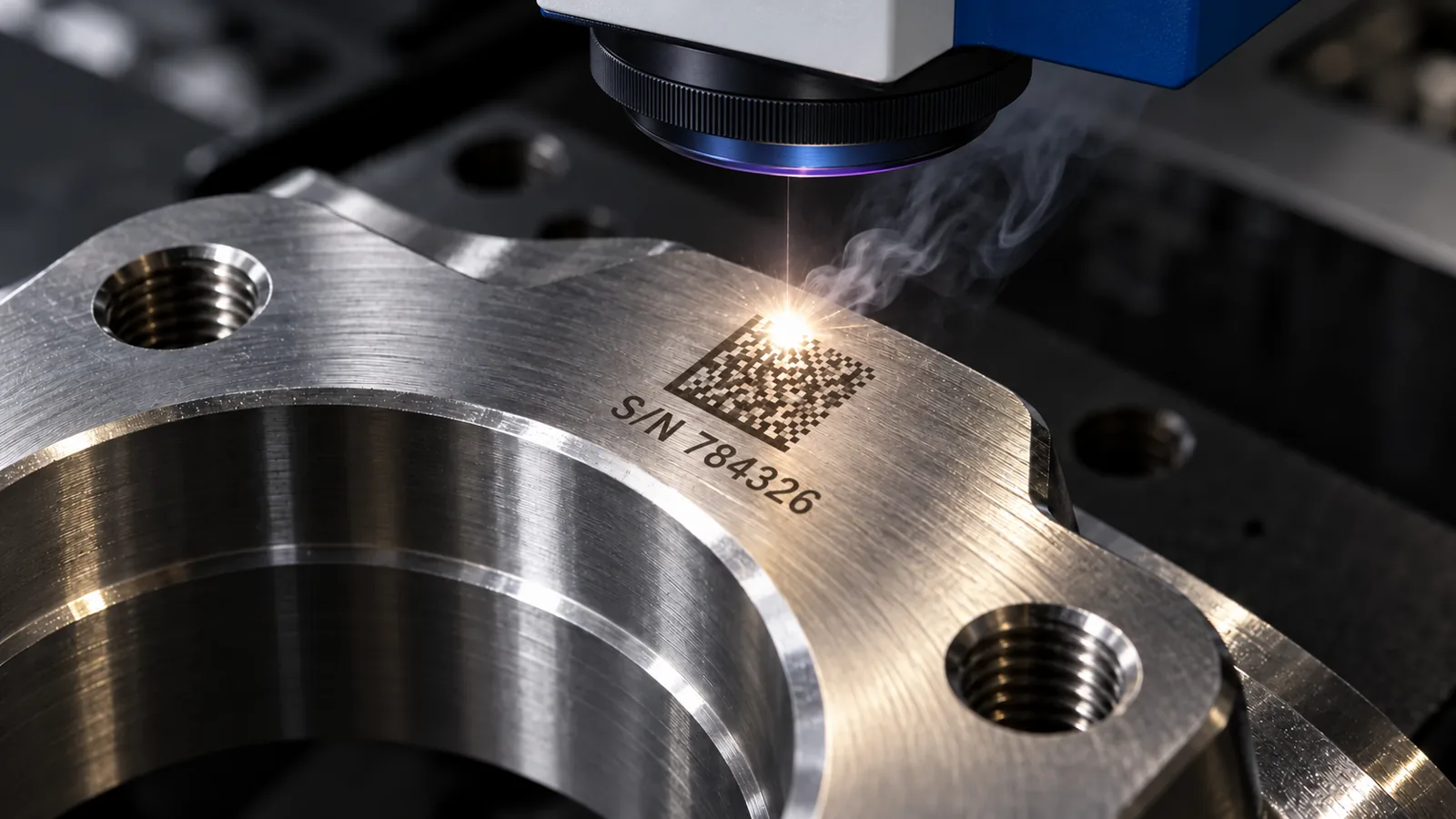
Laser Engraving for Nameplates and Data Plates
Make serialized nameplates and data plates on demand, in anodized aluminum, stainless or two-ply plastic, without tooling or minimum orders.
Trusted for nameplates and data plates across Canada






- Trench Group Limited
- Hitachi Energy Canada Inc.
- Northern Transformer
- General Dynamics Valleyfield
- Boeing Canada Operations Ltd.
- Air Canada
Why make data plates on a laser
Most data plates are a fixed layout with a few variable fields: serial number, date, rating, a barcode. That is exactly what a laser is good at. The layout is a template, the variable fields come from a spreadsheet, and each plate is different at no extra cost.
The choice that matters is the substrate. Black anodized aluminum on a CO₂ laser gives a white mark and is the usual choice for equipment plates. Stainless steel needs a fiber laser, or CerMark compound on a CO₂ laser. Two-ply plastic is cheapest and fine indoors.
Typical jobs
- Equipment data plates with serial numbers and ratings
- Asset tags with barcodes, QR or Data Matrix codes
- Valve and pipe tags for plant maintenance
- Warning and instruction plates for machinery
- Control panel nameplates and legend plates
- Replacement plates for older equipment
Materials that work
- Anodized aluminum
A CO₂ laser bleaches the anodize to white or grey. A fiber laser marks it too.
- Stainless steel
Fiber laser for direct marking, or CerMark on a CO₂ laser at high power and slow speed.
- Two-ply engraving plastic
Low cost and quick for indoor plates and labels.
Not sure about a material? Check the laser-safe materials guide.
Setups we usually recommend
- 1
Mixed short runs
An Epilog Fusion Pro with dual sources (CO₂ plus fiber) handles anodized aluminum, plastic and stainless on one bed.
- 2
High-volume metal marking
A fiber marking system from Epilog (Fusion Galvo G100) or Tykma marks parts and plates in seconds. Good when you serialize every unit that leaves the shop.
- 3
Variable data
Plan the template and the serial number source before you buy. Ask us to show you how your layout runs from a spreadsheet.
Equipment and materials

Fusion Pro 24, 36 or 48 with a CO₂ or dual-source CO₂ + fiber, and the Fusion Galvo G100 for fast metal marking.
View Epilog
Fiber, MOPA, UV and CO₂ marking systems for production lines and enclosed workstations.
View Tykma
Two-ply sheet for indoor plates and labels, including UV-stable lines for outdoor use.
View RowmarkQuestions we get asked
Can a CO₂ laser mark stainless steel?
Not on its own. With a marking compound such as CerMark, a CO₂ laser fuses a black mark onto bare stainless. It needs high power and slow speed, so test first. For volume, a fiber laser marks stainless directly.
Which is better for data plates, anodized aluminum or stainless?
Anodized aluminum is lighter, cheaper and marks fast on a CO₂ laser. Stainless suits high heat, chemicals or abrasion. Your customer's spec usually decides.
Can the laser read serial numbers from a spreadsheet?
Yes. Most shops build a template and merge the variable fields from a CSV or spreadsheet. We can show you the workflow before you buy.
Want to make your data plates in-house?
Send us a sample plate or drawing and your yearly volume. We'll tell you which laser and substrate fit.