Laser-Safe Materials
Can I Laser This? Laser-Safe Materials Guide
A quick reference for CO₂ and fiber lasers: what works, what needs care, and what never goes in the machine.
Material by material
"Yes" means the material works with normal care: extraction on, air assist for cutting, and someone at the machine. Settings vary by machine and wattage, so test on a scrap first.
| Material | CO₂ laser | Fiber laser | Notes and hazards |
|---|---|---|---|
| Solid wood | Yes Engrave and cut | No Not suitable | Resinous woods such as pine can flare. Keep air assist on when cutting and never leave a job running unattended. |
| Plywood and MDF | Yes Engrave and cut | No Not suitable | The glues give off formaldehyde-bearing fumes, so extraction matters. Buy laser-grade plywood; glue voids stop the cut. |
| Cast acrylic | Yes Engrave and cut | No Not suitable | Engraves frosty white and cuts with a polished edge. Strong odour, so extract. Watch thick cuts for flame. |
| Extruded acrylic | Yes Cuts well, engraves poorly | No Not suitable | Cheaper than cast. Cut edges are clean, but engraving looks clear rather than frosted. |
| Rowmark two-ply engraving plastic | Yes Engrave and cut | Limited Most lines: no | Made for CO₂ lasers. Check the spec sheet before running any line on a fiber laser. |
| Vegetable-tanned leather | Yes Engrave and cut | No Not suitable | Strong smell; extract well. |
| Laserable leatherette (PU) | Yes Engrave and cut | No Not suitable | Only PU-based, PVC-free leatherette sold for lasers. Most "faux leather" from fabric stores is vinyl (PVC): never laser it. |
| Laser rubber | Yes Engrave and cut | No Not suitable | Only rubber sold for laser stamp making. Never craft foam, neoprene, or rubber you can't identify. |
| Glass | Yes Etch only | No Not suitable | The laser frosts the surface; it can't cut glass. Low power and lower resolution reduce chipping. |
| Stone, slate, granite, marble, tile | Yes Engrave | Limited Some stone; test first | Granite and quartz release respirable crystalline silica. Use HEPA-filtered extraction and clean up with a HEPA vacuum. |
| Anodized aluminum | Yes Marks white | Yes Marks; MOPA can go darker | A CO₂ laser bleaches the dyed anodize to white or grey. It doesn't reach bare metal. |
| Coated and painted metal | Yes Removes coating | Yes Removes coating | Includes laserable coated aluminum sheet and powder-coated tumblers. |
| Bare metal (stainless, steel, brass, titanium) | Limited Only with CerMark | Yes Mark and engrave | On a CO₂ laser, CerMark or TherMark compound needs high power and slow speed to fuse. Test first. |
| Paper and card stock | Yes Engrave and cut | No Not suitable | Catches fire easily. Use low power and air assist, and stay at the machine. |
| Fabric and felt | Yes Cut and engrave | No Not suitable | Cotton, wool felt and polyester cut well; polyester seals its edge. Avoid vinyl-coated fabrics. |
| Cork | Yes Engrave and cut | No Not suitable | Scorches and can flare. Use low power. |
-
- CO₂
- Yes Engrave and cut
- Fiber
- No Not suitable
Resinous woods such as pine can flare. Keep air assist on when cutting and never leave a job running unattended.
-
- CO₂
- Yes Engrave and cut
- Fiber
- No Not suitable
The glues give off formaldehyde-bearing fumes, so extraction matters. Buy laser-grade plywood; glue voids stop the cut.
-
Cast acrylic
- CO₂
- Yes Engrave and cut
- Fiber
- No Not suitable
Engraves frosty white and cuts with a polished edge. Strong odour, so extract. Watch thick cuts for flame.
-
Extruded acrylic
- CO₂
- Yes Cuts well, engraves poorly
- Fiber
- No Not suitable
Cheaper than cast. Cut edges are clean, but engraving looks clear rather than frosted.
-
Rowmark two-ply engraving plastic
- CO₂
- Yes Engrave and cut
- Fiber
- Limited Most lines: no
Made for CO₂ lasers. Check the spec sheet before running any line on a fiber laser.
-
Vegetable-tanned leather
- CO₂
- Yes Engrave and cut
- Fiber
- No Not suitable
Strong smell; extract well.
-
- CO₂
- Yes Engrave and cut
- Fiber
- No Not suitable
Only PU-based, PVC-free leatherette sold for lasers. Most "faux leather" from fabric stores is vinyl (PVC): never laser it.
-
- CO₂
- Yes Engrave and cut
- Fiber
- No Not suitable
Only rubber sold for laser stamp making. Never craft foam, neoprene, or rubber you can't identify.
-
Glass
- CO₂
- Yes Etch only
- Fiber
- No Not suitable
The laser frosts the surface; it can't cut glass. Low power and lower resolution reduce chipping.
-
Stone, slate, granite, marble, tile
- CO₂
- Yes Engrave
- Fiber
- Limited Some stone; test first
Granite and quartz release respirable crystalline silica. Use HEPA-filtered extraction and clean up with a HEPA vacuum.
-
- CO₂
- Yes Marks white
- Fiber
- Yes Marks; MOPA can go darker
A CO₂ laser bleaches the dyed anodize to white or grey. It doesn't reach bare metal.
-
- CO₂
- Yes Removes coating
- Fiber
- Yes Removes coating
Includes laserable coated aluminum sheet and powder-coated tumblers.
-
Bare metal (stainless, steel, brass, titanium)
- CO₂
- Limited Only with CerMark
- Fiber
- Yes Mark and engrave
On a CO₂ laser, CerMark or TherMark compound needs high power and slow speed to fuse. Test first.
-
Paper and card stock
- CO₂
- Yes Engrave and cut
- Fiber
- No Not suitable
Catches fire easily. Use low power and air assist, and stay at the machine.
-
Fabric and felt
- CO₂
- Yes Cut and engrave
- Fiber
- No Not suitable
Cotton, wool felt and polyester cut well; polyester seals its edge. Avoid vinyl-coated fabrics.
-
Cork
- CO₂
- Yes Engrave and cut
- Fiber
- No Not suitable
Scorches and can flare. Use low power.
Never put these in a laser
On any laser, CO₂ or fiber. Print this list and post it next to the machine.
-
PVC and vinyl
Releases hydrogen chloride gas, which harms your lungs and corrodes the laser. Includes vinyl "faux leather", PVC foam board, vinyl-coated fabric and many plastic sheets sold without a label.
-
Polycarbonate (Lexan)
Discolours, burns, and cuts poorly. Often confused with acrylic: if a clear sheet isn't labelled, don't laser it.
-
ABS
Melts and gives off fumes that can contain hydrogen cyanide.
-
HDPE
Melts into a gummy mess and catches fire.
-
PTFE (Teflon)
Releases toxic fluorine compounds when heated.
-
Fibreglass and coated carbon fibre
The resins give off harmful fumes, and the glass or carbon fibres become airborne dust.
-
Polystyrene foam
Catches fire quickly and melts.
-
Chrome-tanned leather
Never laser chrome-tanned leather. Heating it can produce chromium compounds you don't want to breathe. Use vegetable-tanned leather and good extraction.
-
Neoprene and unknown rubber
Never laser neoprene or rubber you can't identify. Many contain chlorine. Use rubber sold for lasers.
-
Anything you can't identify
If nobody can tell you what it is, it doesn't go in the laser.
Fume extraction, every time
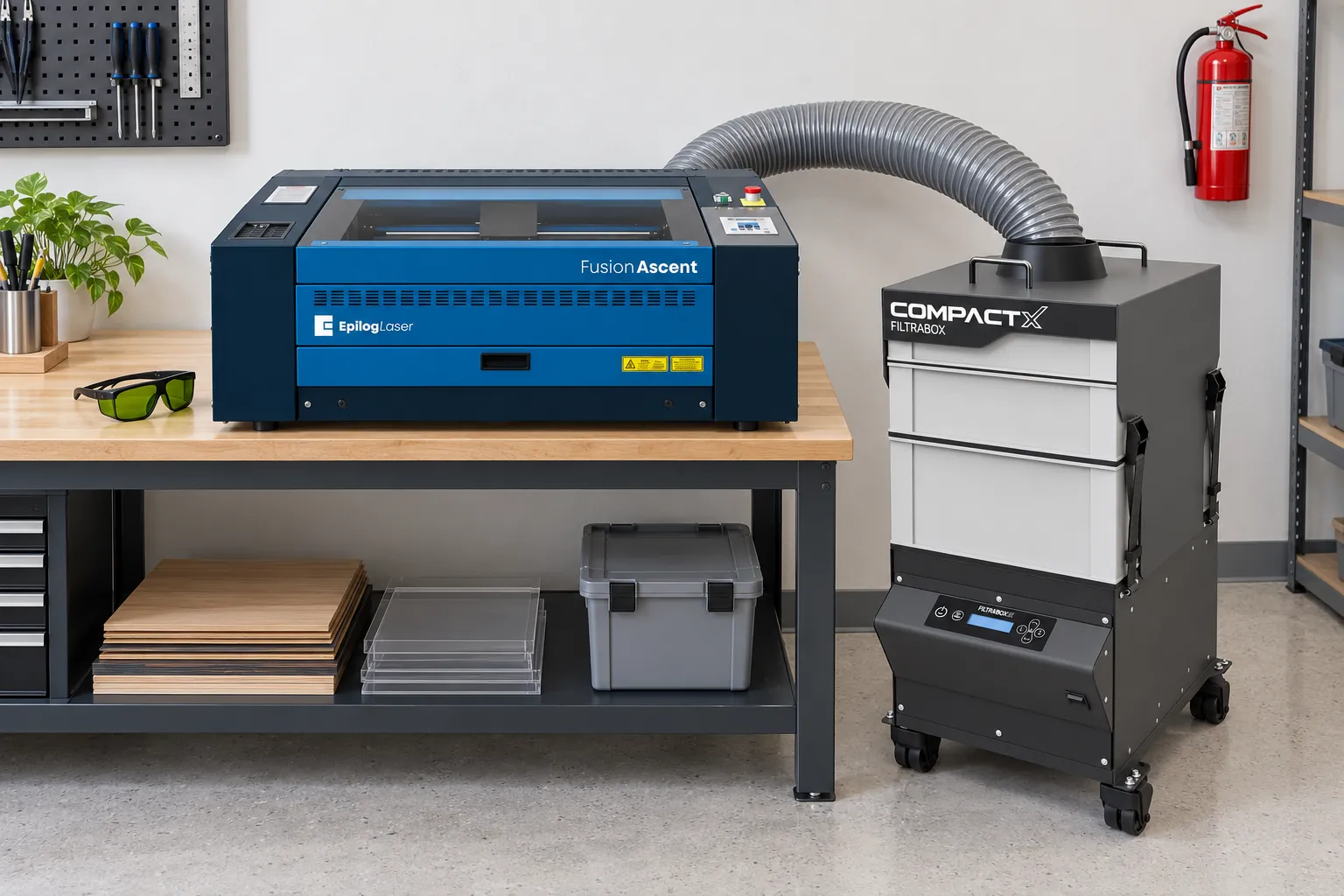
Even safe materials give off smoke and fumes when lasered. Wood and MDF produce fine particles and glue fumes; acrylic has a strong odour; stone produces fine dust. Run extraction for every job, and let it run for a short while after the job ends.
Where you can vent outdoors, do. Where you can't, a filtered extractor captures particles and fumes in the room. We sell FiltraBox units, made in Quebec, and size them to the laser and the materials you run most.
- Never leave a running job unattended.
- Keep air assist on when cutting.
- Keep a fire extinguisher suited to the laser within reach, and know how to use it.
- Clean the honeycomb or cutting table and the exhaust path regularly; built-up residue burns.
- Change extractor filters on schedule.
Common questions
Can I laser PVC or vinyl?
No. PVC and vinyl release hydrogen chloride gas when cut or engraved. It harms your lungs and corrodes the laser's optics and metal parts. Many faux leathers and unlabelled plastic sheets are PVC, so if you can't confirm what it is, don't laser it.
Can a CO₂ laser mark stainless steel?
Not directly. Apply a marking compound such as CerMark or TherMark to bare metal, then run the laser at high power and slow speed so the compound fuses. A fiber laser marks stainless directly.
What is the difference between cast and extruded acrylic?
Cast acrylic engraves a frosty white and cuts with a polished edge. Extruded acrylic cuts well and costs less, but engraved areas look clear rather than frosted. For engraved signs and awards, use cast.
Is it safe to laser engrave stone?
The laser part is routine, but granite and quartz release respirable crystalline silica dust. Use extraction with HEPA filtration, clean up with a HEPA vacuum rather than compressed air, and follow your provincial rules on silica exposure.
Do I need fume extraction?
Yes, for every laser and every material. You can vent outdoors where the building allows it, or use a filtered extractor such as a FiltraBox where it doesn't. Size the extractor to your laser and to what you cut most.
Is polycarbonate safe to laser?
No. It discolours, burns, and cuts poorly. Use cast or extruded acrylic instead.
Not sure about a material?
Send us what it is and where it came from. We'll tell you whether it's safe to laser and what settings to start with.