Authorized Canadian Tykma dealer

Tykma Fiber Laser Marking Systems in Canada

Industrial marking workstations for serial numbers, barcodes and part IDs on metal and plastic. Fiber, MOPA, UV and CO₂ sources, from benchtop units to systems built into your line.

Built for part marking

Tykma Electrox is headquartered in Chillicothe, Ohio. Its systems mark parts for automotive, aerospace, medical device, defence and general manufacturing customers.

Epilog and Kern lasers engrave and cut. Tykma systems do one job: put a permanent, readable mark on a part. That means serial numbers, barcodes, Data Matrix codes and compliance marks that have to last the life of the part.

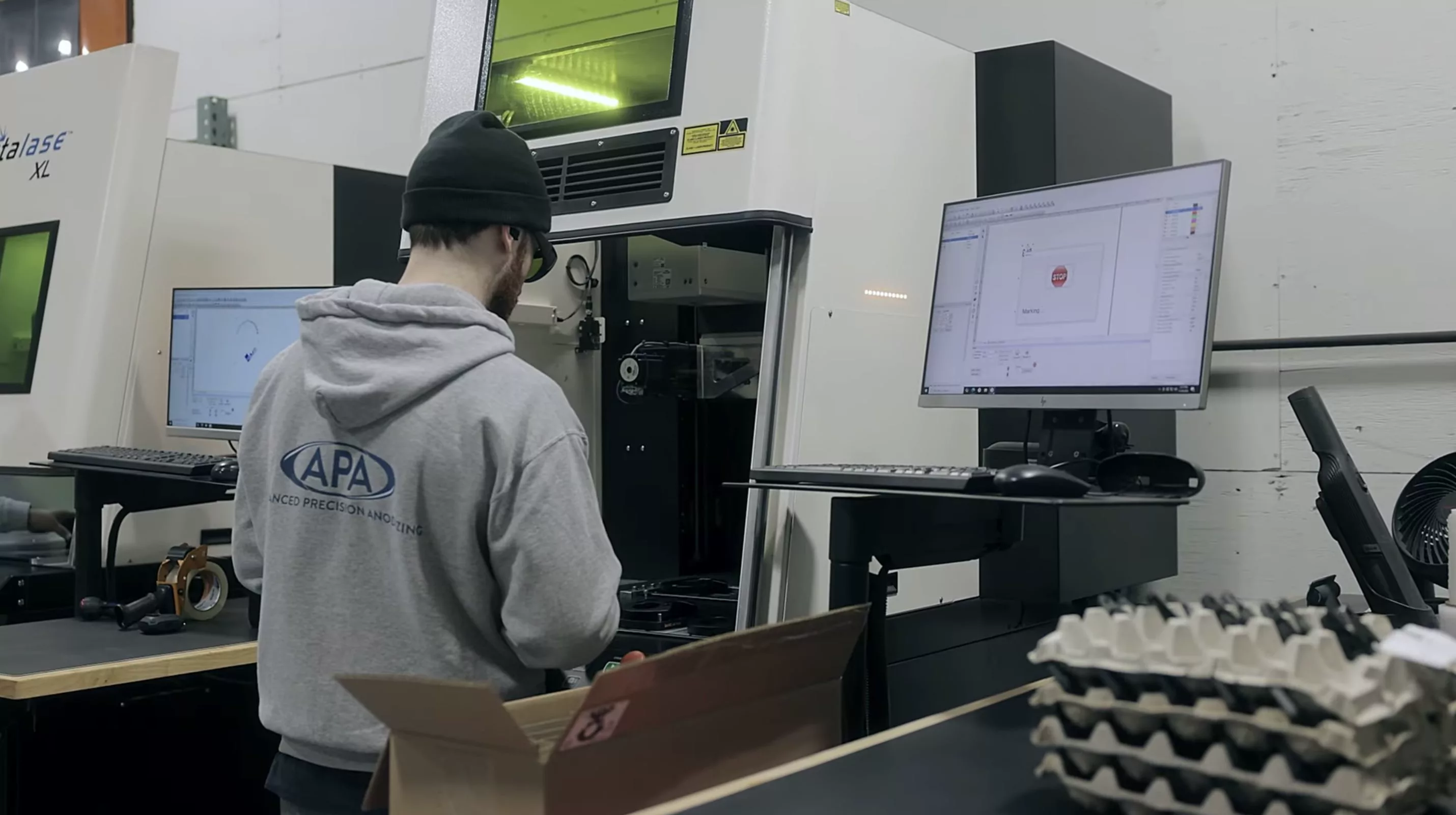
Operator loading parts into a Tykma Zetalase XL marking workstation in a production shop

What the systems can do

  • MOPA fiber: pulse control for black, colour and high-contrast marks on metal
  • UV: cold marking on plastics, silicone and heat-sensitive parts
  • CO₂: marking wood, glass, cardboard, leather and coated parts
  • Annealing: a black mark on stainless steel with no material removed
  • Deep engraving for moulds, tooling and firearms
  • 1D barcodes, 2D Data Matrix and QR codes
  • Serial numbers and date codes from the marking software
  • Integration into automated lines

Tykma marking systems

Benchtop, floor-standing, high-throughput and integration systems. Tell us the part, the material and the mark, and we'll quote the right configuration.

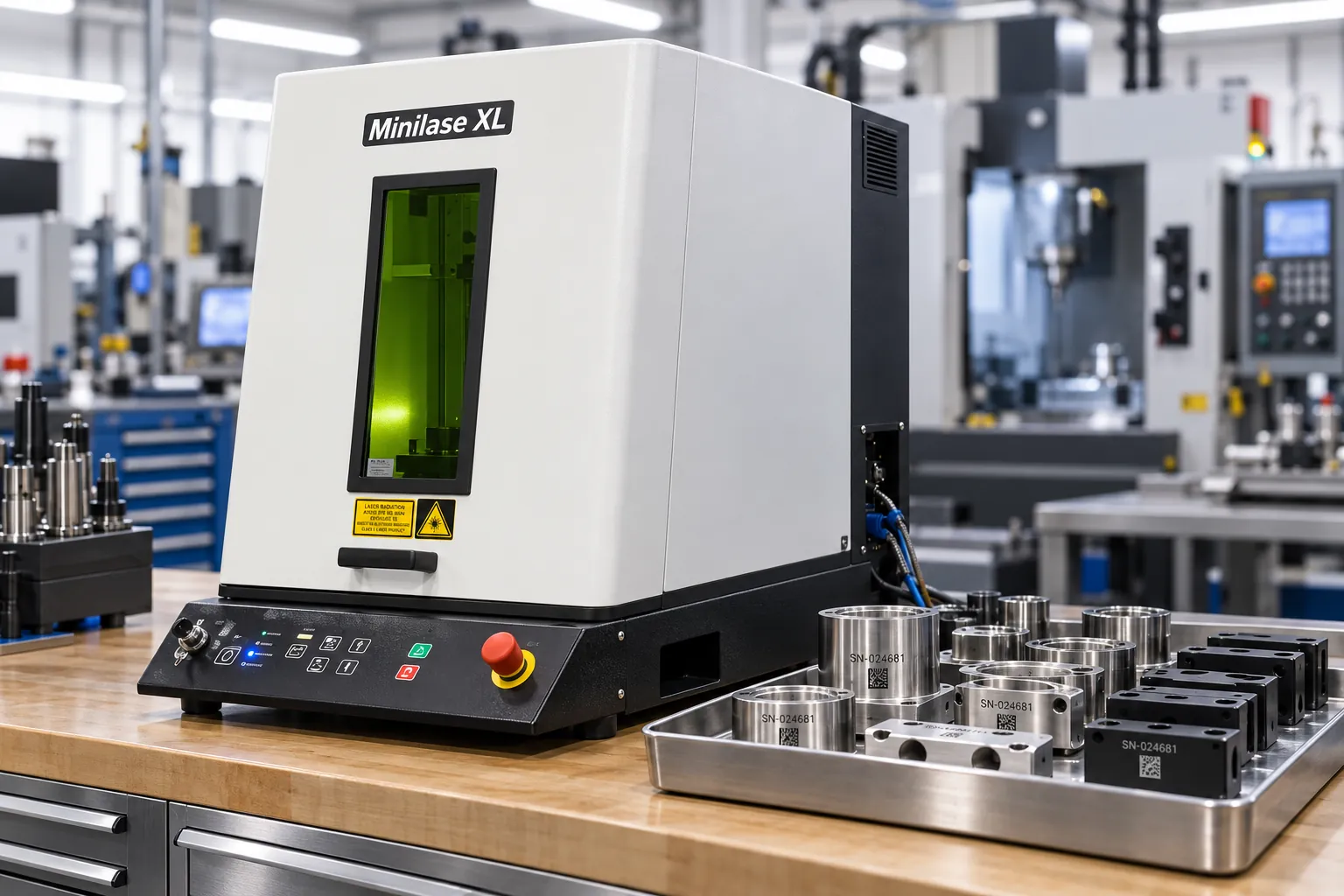
Fiber laser marking workstation with marked stainless and aluminum parts (illustration)

Minilase

Fiber (benchtop)

Format
Class 1 benchtop; handheld and open versions
Laser
MOPA fiber: 20W (LBL), 30 or 60W (Manual, Auto Door), 30–100W (XL)
Features
Manual or pneumatic door; programmable focal height upgrade
  • Minilase LBL: compact 20W MOPA, 4″ × 4″ field
  • Minilase Manual: 30 or 60W MOPA, spring-loaded manual door
  • Minilase Auto Door: 30 or 60W MOPA, pneumatic door that opens on three sides
  • Minilase XL and XL Manual: mid-size benchtop, 30–100W MOPA, parts up to 317 × 508mm
  • LaseNGo: Class 1 handheld marker, 20W MOPA; the head must seal on the part before it fires
  • Virtus: entry-level open marker (Class 4), 30, 60 or 100W MOPA
Quote this system
Tykma Zetalase XL floor-standing fiber laser marking workstation

Zetalase

MOPA fiber, UV or CO₂ (floor-standing)

Format
Floor-standing workstation
Laser
MOPA fiber 30–100W (UV 10W and CO₂ 60–100W versions)
XLT field
24″ × 24″, no indexing
Air supply
60–80 PSI (Zetalase XL)
  • Zetalase XL: 30, 60 or 100W MOPA, built-in Windows PC, parts up to 24″ × 30″
  • Zetalase XL UV: 10W UV with closed-loop water chilling
  • Zetalase XL CO₂: 60–100W CO₂
  • Zetalase XL MFSS 3D: 12″ × 12″ field, with a 6.5″ 3D field for contoured parts
  • Zetalase XLT: continuous 24″ × 24″ field with no indexing or stitching, 30–100W MOPA
  • Zetalase XLT Picosecond: 50W picosecond laser, 24″ × 24″ work area, optional vision, for corrosion-resistant black marks on stainless, titanium and nitinol
Quote this system
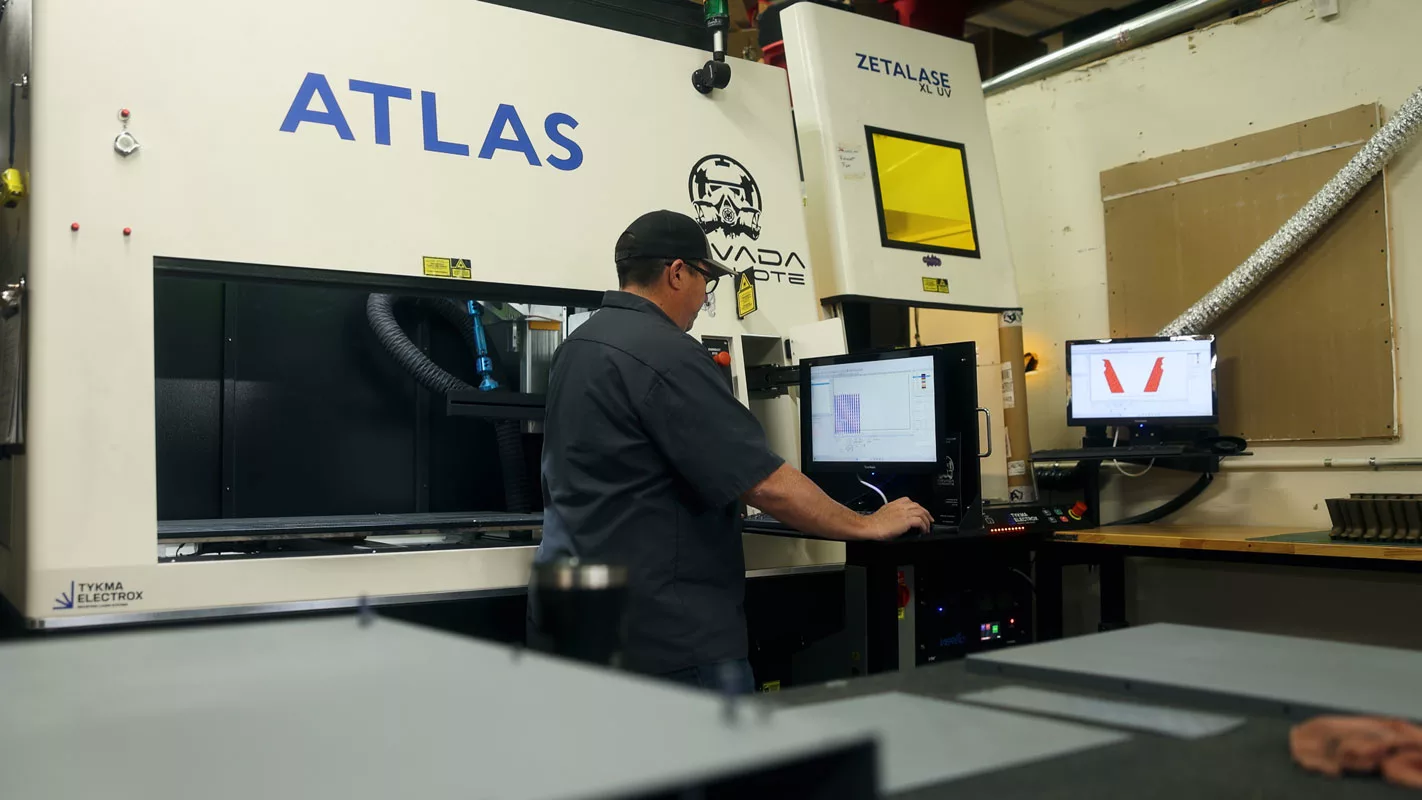
Operator at a Tykma ATLAS large-area laser marking system, with a Zetalase XL UV beside it

High-throughput

Large-area XYZ and dial-index systems

Format
XYZ gantry or dial-index table
ATLAS field
48″ × 24″ (1,219 × 610mm)
Duo table
600mm, two positions
  • ATLAS XYZ: large-area marking over a 48″ × 24″ field
  • Zetalase Duo Dial Index: 600mm two-position dial table, so the operator loads while the laser marks; light curtains; Class 1
  • EMS400 XYZ: ask us for current specs
Quote this system
Tykma laser marking a metal part inside the work chamber

Vereo

Fiber, UV or CO₂ (integration)

Format
19″ rack-mount controller, for automated lines
Fiber
MOPA 20–100W
Other sources
UV 10W, CO₂ 60–100W
Control
Windows PC required; Vereo Smart needs none
  • Vereo: MOPA fiber up to 100W, 19″ rack-mount controller, mark-on-the-fly
  • Vereo Smart: built-in controller, so no PC is needed; manage jobs from a web browser; PLC setup wizard; 20–100W
  • Vereo 3D: 20–50W MOPA, 6.5″ × 6.5″ field with 1.57″ of dynamic focus for contoured parts
  • Vereo UV: 10W UV, water-cooled
  • Vereo CO₂: 60–100W for wood, glass, cardboard, leather, plastics and coatings
Quote this system

The Minilase XL and the Zetalase XL, XLT, XL 3D, XL CO₂ and XL UV are Class 1, with a Class 4 open-door mode that needs an override key.

Other Tykma systems: we can also quote Tykma's EMS300 and WK Series custom workstations. Ask us for current specs and pricing.

Materials and marks

The parts and finishes we see most often.

Metals

  • Stainless steel: black annealed marks
  • Aluminum and anodized aluminum
  • Brass, copper, titanium and carbide
  • Galvanized and plated parts
  • Black oxide and coated parts

Plastics and coatings

  • UV marking on plastics
  • Cerakote: colour change and ablation
  • Painted parts: ablate to show the base material
  • Rubber and silicone
  • Glass-filled plastics

What gets marked

  • Serial numbers and date codes
  • 1D barcodes and Data Matrix codes
  • QR codes for traceability
  • Logos and graphics
  • Deep marks on moulds and tooling

Why buy Tykma from Synergy

Picking the wavelength, power and configuration for a marking job takes testing. We do that work with you before you buy.

Application testing

We help you choose fiber, UV or CO₂, and the right power, for your material and your mark.

Integration help

Support with line integration, PLC communication and fixturing.

Canadian contact

Sales and support from Delta, BC and Mississauga, ON. Call us and you reach someone here.

Service and parts

Parts and service through us, including remote help with software and settings.

Laser marking questions

Do I need a fiber, UV or CO₂ marking laser?

Fiber, and MOPA fiber in particular, covers most metal marking: serial numbers, Data Matrix codes and black annealed marks on stainless. UV is for plastics and parts that can’t take heat. CO₂ marks wood, glass, cardboard, leather and coatings. Send us a sample part and the mark you need and we will recommend a source.

Can a Tykma laser mark serial numbers and Data Matrix codes automatically?

Yes. The marking software handles serial numbers, date codes, 1D barcodes, 2D Data Matrix and QR codes, so each part gets a unique mark without editing the job by hand.

Can Tykma lasers be built into a production line?

Yes. The Vereo family is made for integration. It mounts in a rack, talks to common PLCs, and the Vereo Smart runs without a PC.

Tykma or Epilog Fusion Galvo for metal marking?

The Epilog Fusion Galvo suits shops that mix part marking with personalization work. Tykma suits dedicated production marking: floor-standing workstations, dial-index tables, large fields, line integration, and UV or CO₂ sources.

Who is Tykma Electrox?

Tykma Electrox builds industrial laser marking systems and is headquartered in Chillicothe, Ohio.

Book a live online demo, or visit us in Delta, BC or Mississauga, ON

Tell us what you need to mark, on what material, and where the laser will sit: benchtop, floor or production line. Visits are by appointment. Can't get to a showroom? Send us your files and we'll mark your parts on a real laser while you watch over video call.